
Reading Rituals for Rejuvenating Rivers
The Mahakumbh 2025 in Prayagraj, Uttar Pradesh, held at the sacred Sangam of three rivers—where the Ganga, the Yamuna, and the mythical Saraswati converge—drew more than 65 crore visitors over a span of 45 days, manifesting a profound spiritual bond with the river. The event underscores an immense cultural convening power, embedding ecological ethics within the religious practice, legends, and beliefs.
The monumental gathering drove two contrasting narratives:
- Celebrating the societal and spiritual virtues of the Indian traditions that cherish nature
- Examining the environmental impacts of mass congregations during ritual practices that shear river ecologies
“It is an occasion where saints, sages, and devotees come together, transcending boundaries to celebrate the divine.”
- Swami Kailashanand Giri Ji (Acharya Mahamandaleshwar, Niranjani Akhara)
UNPACKING “AASTHA” AS AN “ASTRA”
We want to bring rituals and practices to the centre of analysis in thinking about rejuvenating rivers. The approach recognises the rituals and practices are informed and produced by an ecosystem where a variety of agents, actors, and networks actively participate. These range from priests, pandas, pandits to popular preachers and spiritual thought leaders, extending to the institutionalised versions, including ashrams, akharas, and other institutional forms.
The political and economic interests are also a part of the ecosystem, transcending the spiritual or religious networks. Therefore, to make rejuvenating rivers a people’s programme, reimagining rituals must work with these networks and institutions.
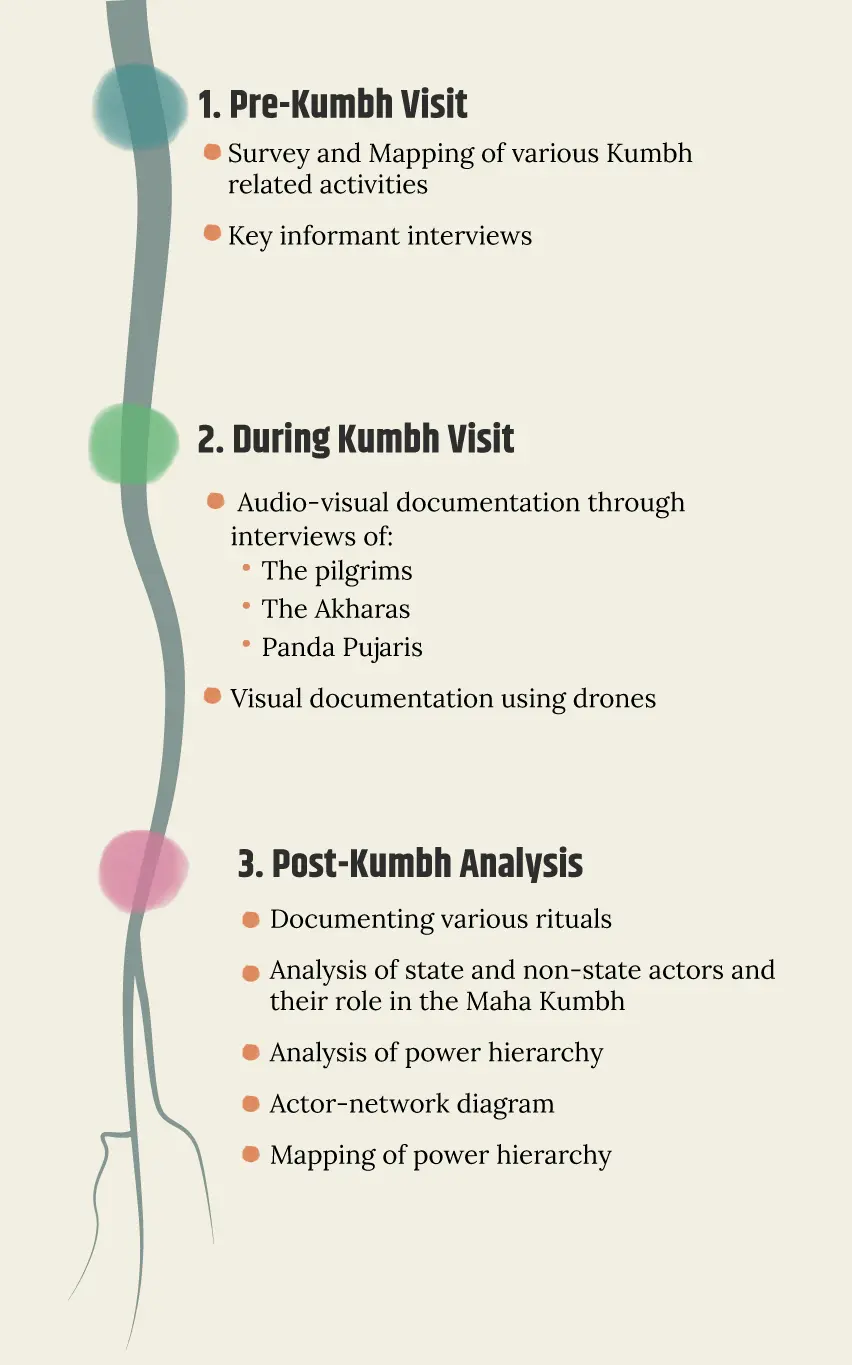
Our research is driven by the following question:
Can we reimagine the rituals and practices for river rejuvenation? How can we redeploy the power relations towards river rejuvenation?
“We believe that taking a dip at the Prayagraj Sangam —the confluence of the Ganga, Yamuna, and the mystical Saraswati, purifies our soul and liberates us from the bondages of life. A dip in the holy waters will wash away our sins in its flow, as we believe it allows us to be reborn. We are truly fortunate to have the opportunity to attend the Sangam and hope to continue this tradition in the future.”
- Devotees speak to our researcher about the significance of the Kumbh for them
Our Approach
Legends, Rituals, Customs and Practices at the Maha Kumbh
The Kumbh Mela is an assembly of rituals, with Amrit Snan (earlier Shahi Snan) being the most prominent and prevalent among all of them. These traditions, rooted deep within the Hindu cosmography, mythology, and yogic practices, serve a variety of purposes, ranging from spiritual cleansing to affirming social bonds. Most interviewees underscored that attending the Maha Kumbh at Prayagraj was not an individual pilgrimage but a moment of history that would be a memory for generations to come, considering the occurrence of the Maha Kumbh after 144 years.
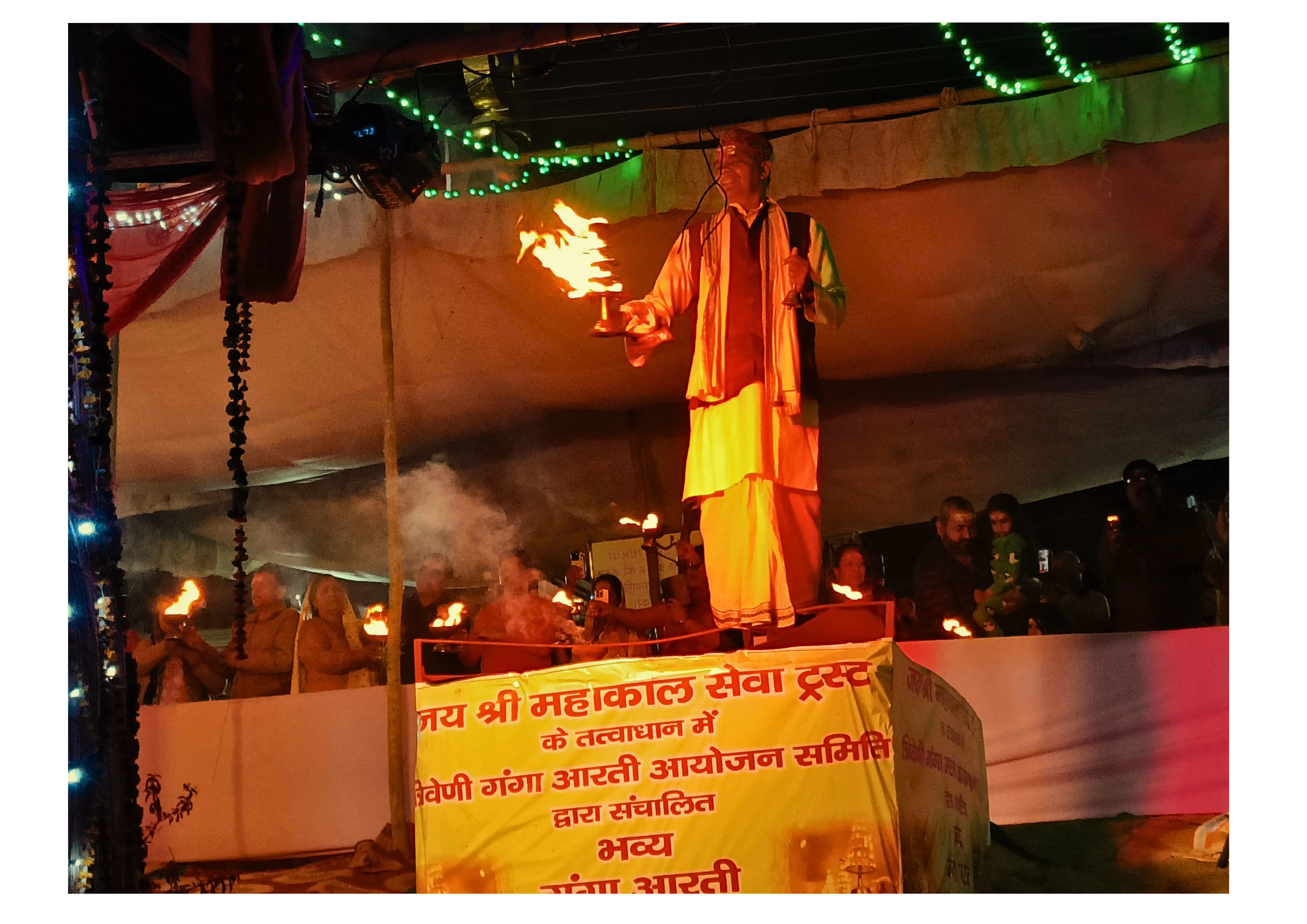
In this section, we have detailed the rituals and their connections to mythology while interpreting them through reflections drawn from our field observations. The section details the range of rituals with water at its core, ranging from Snans as the most prominent ritual and others including Kalpavas, Aarti, and various Daans. It also describes the material engagement at the Maha Kumbh that largely comprises natural materials such as flowers, cereals (barley, rice, sesame seeds), milk, honey, etc. These engagements reflect a deep, ecologically sensitive engagement with the river in ritual performance.
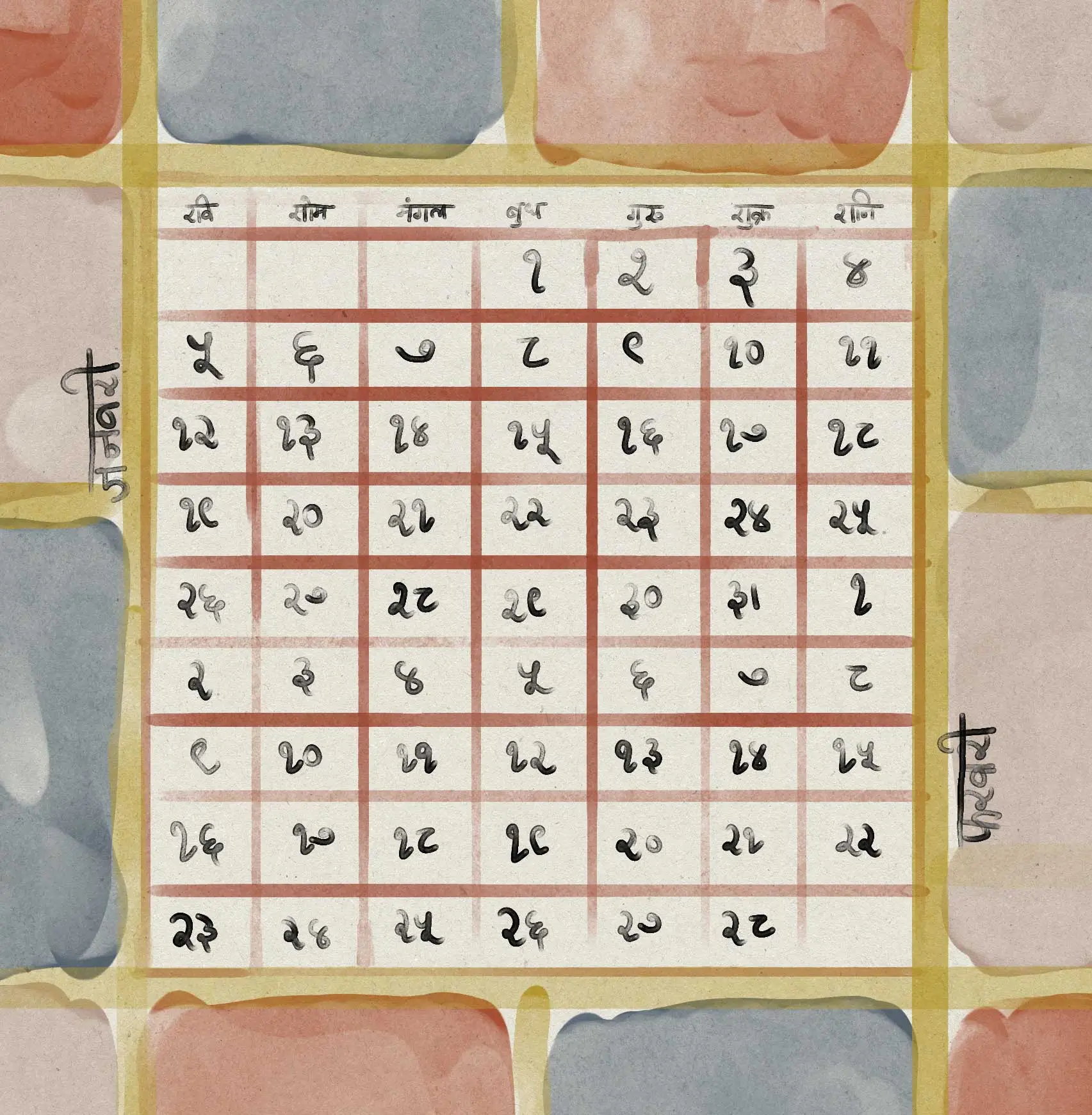

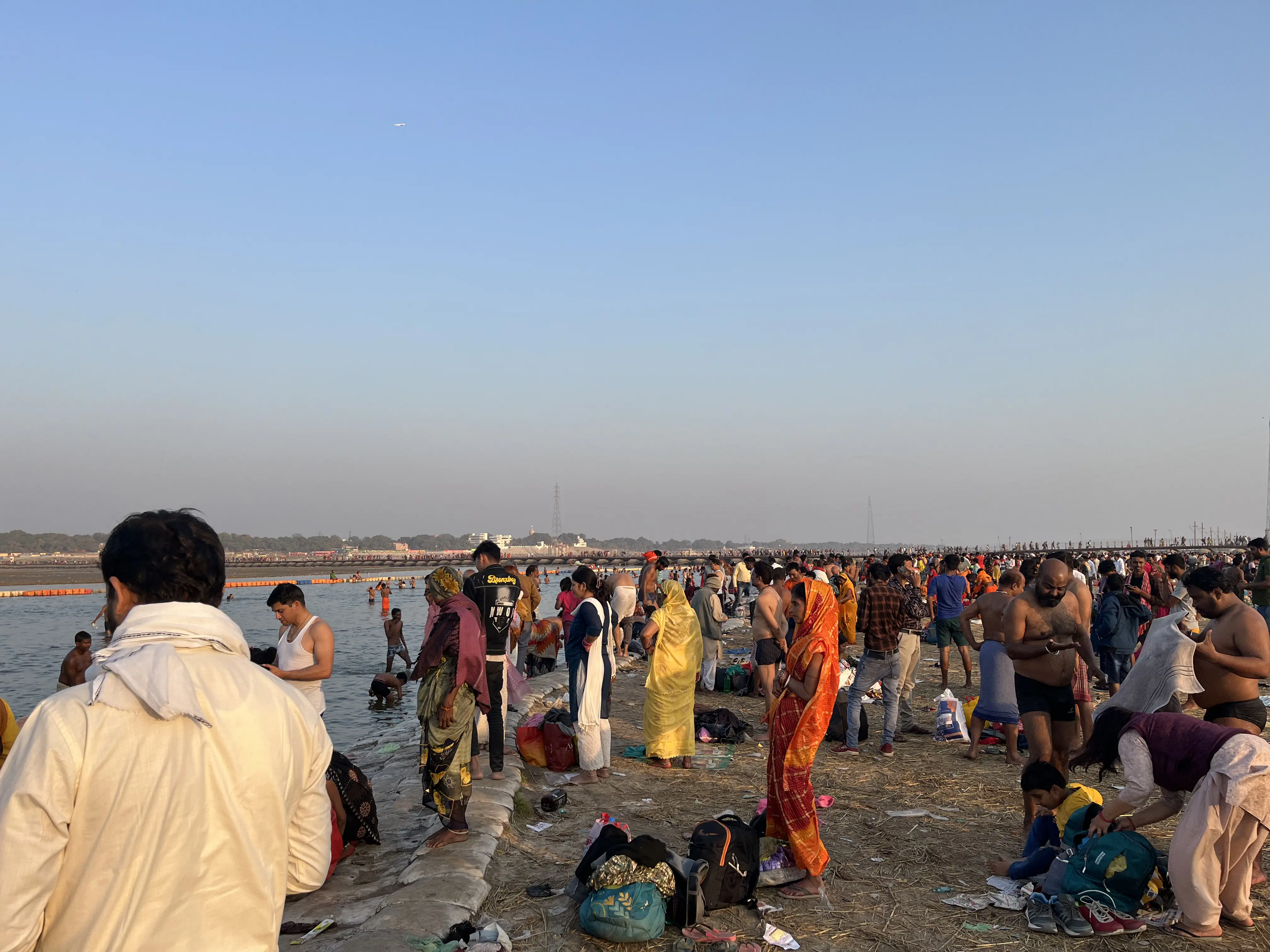
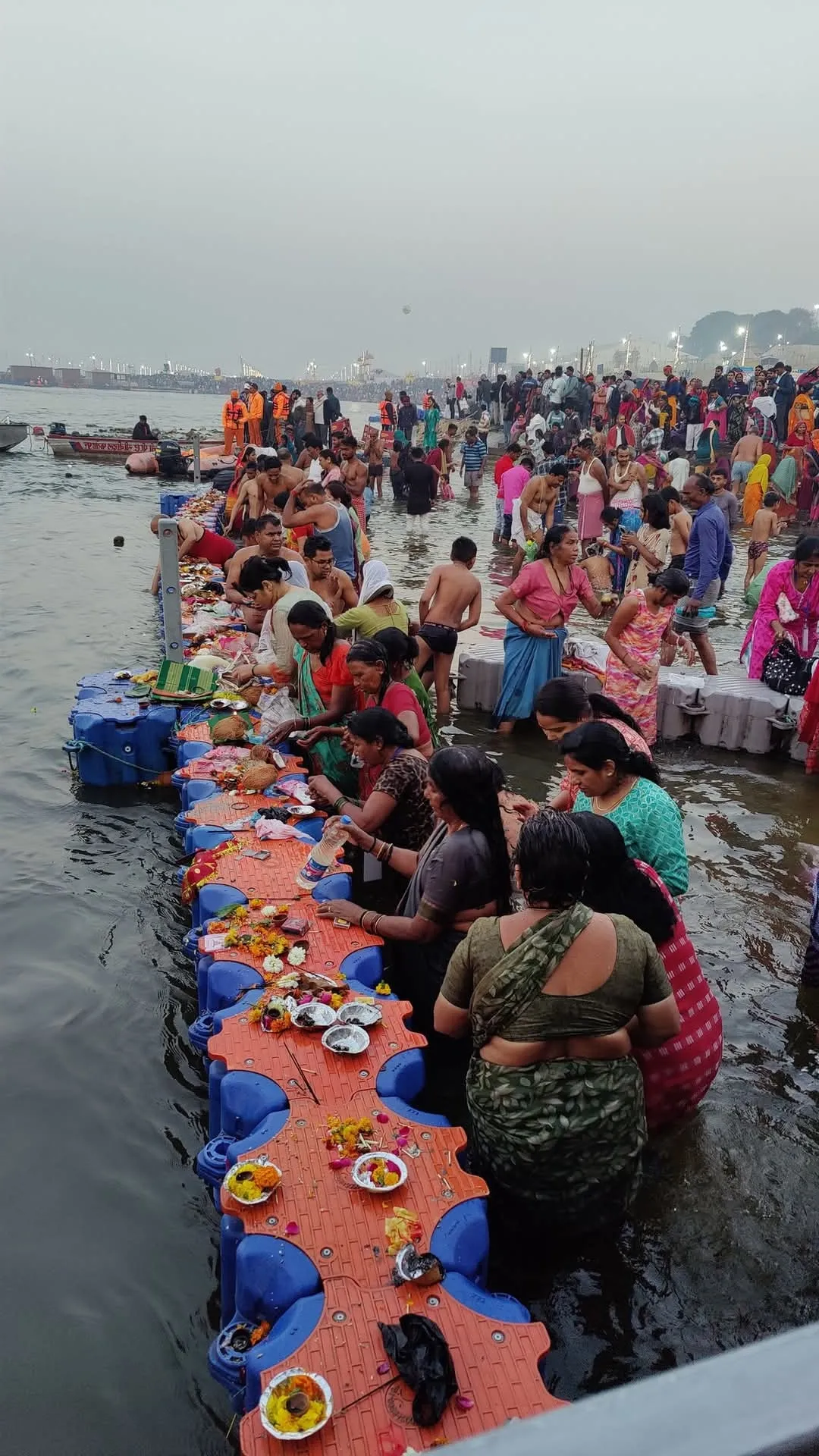
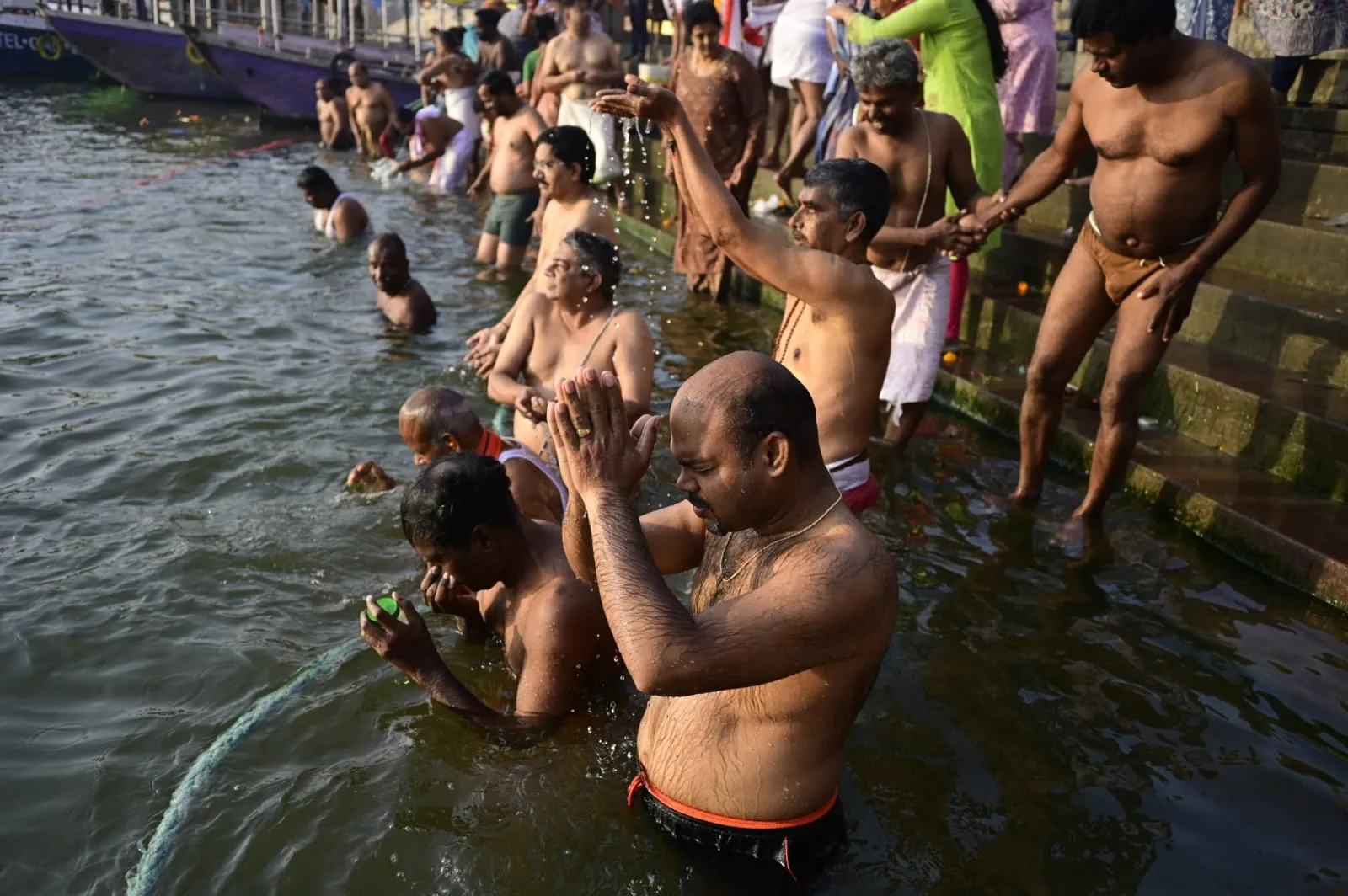

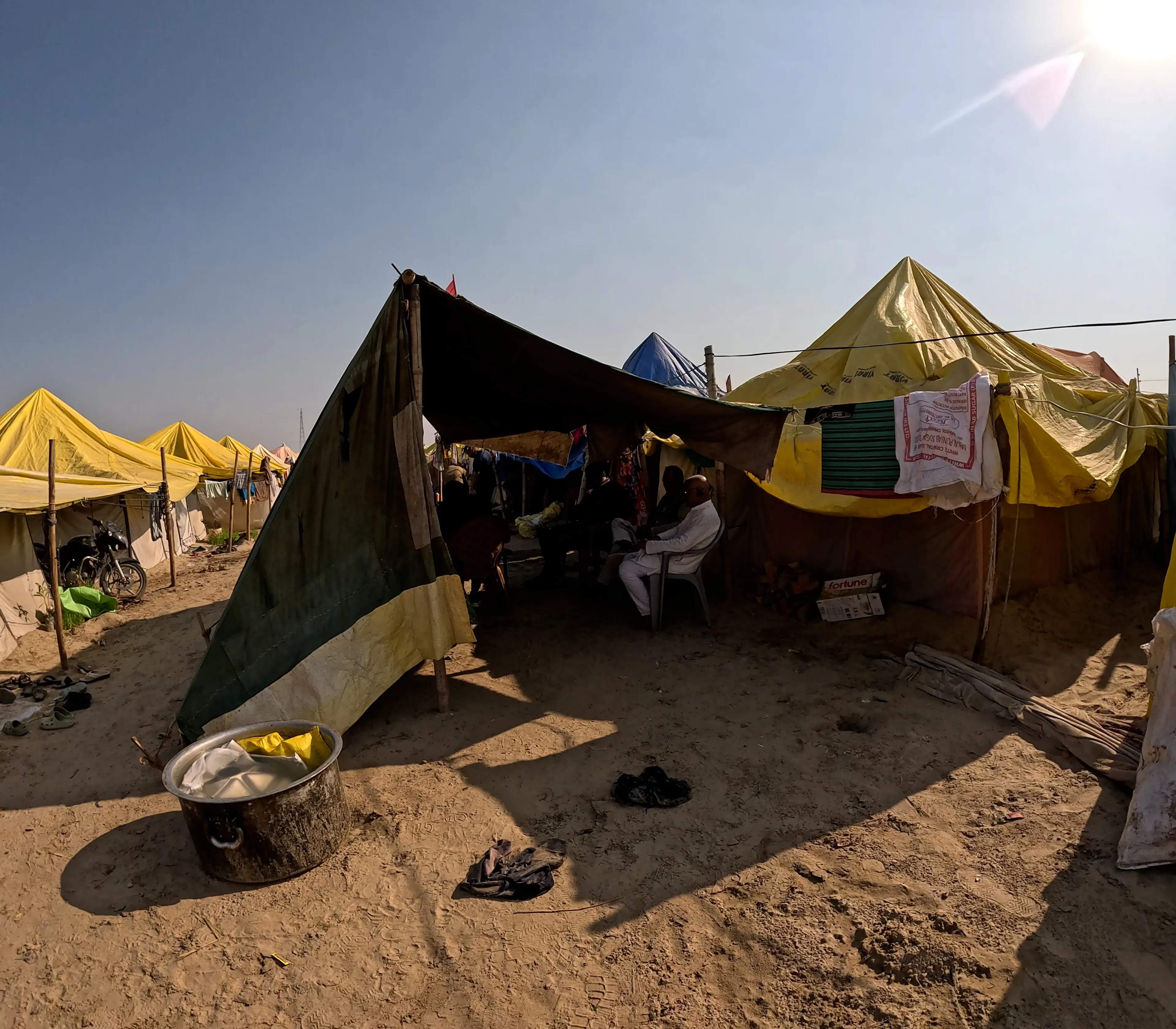
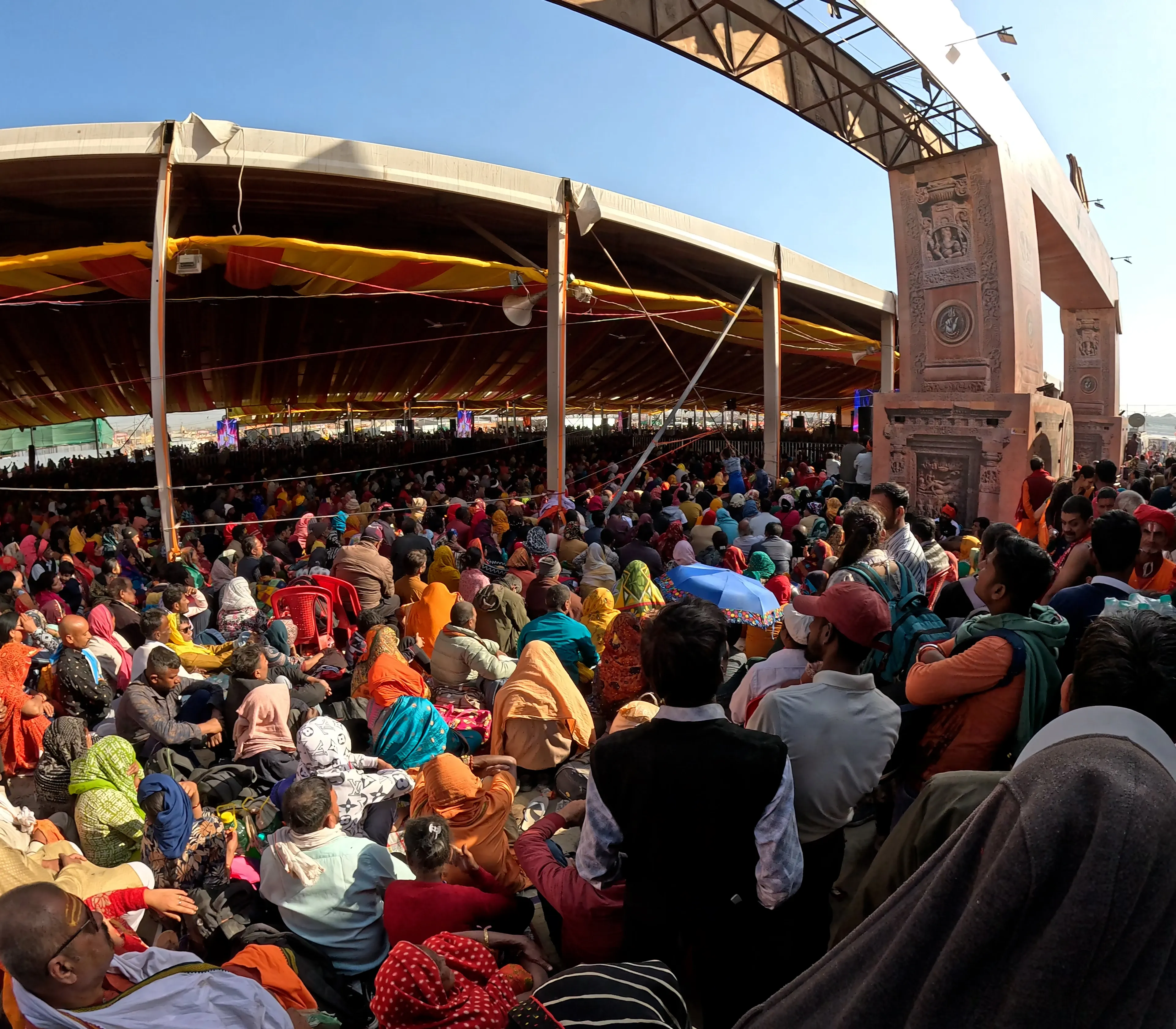
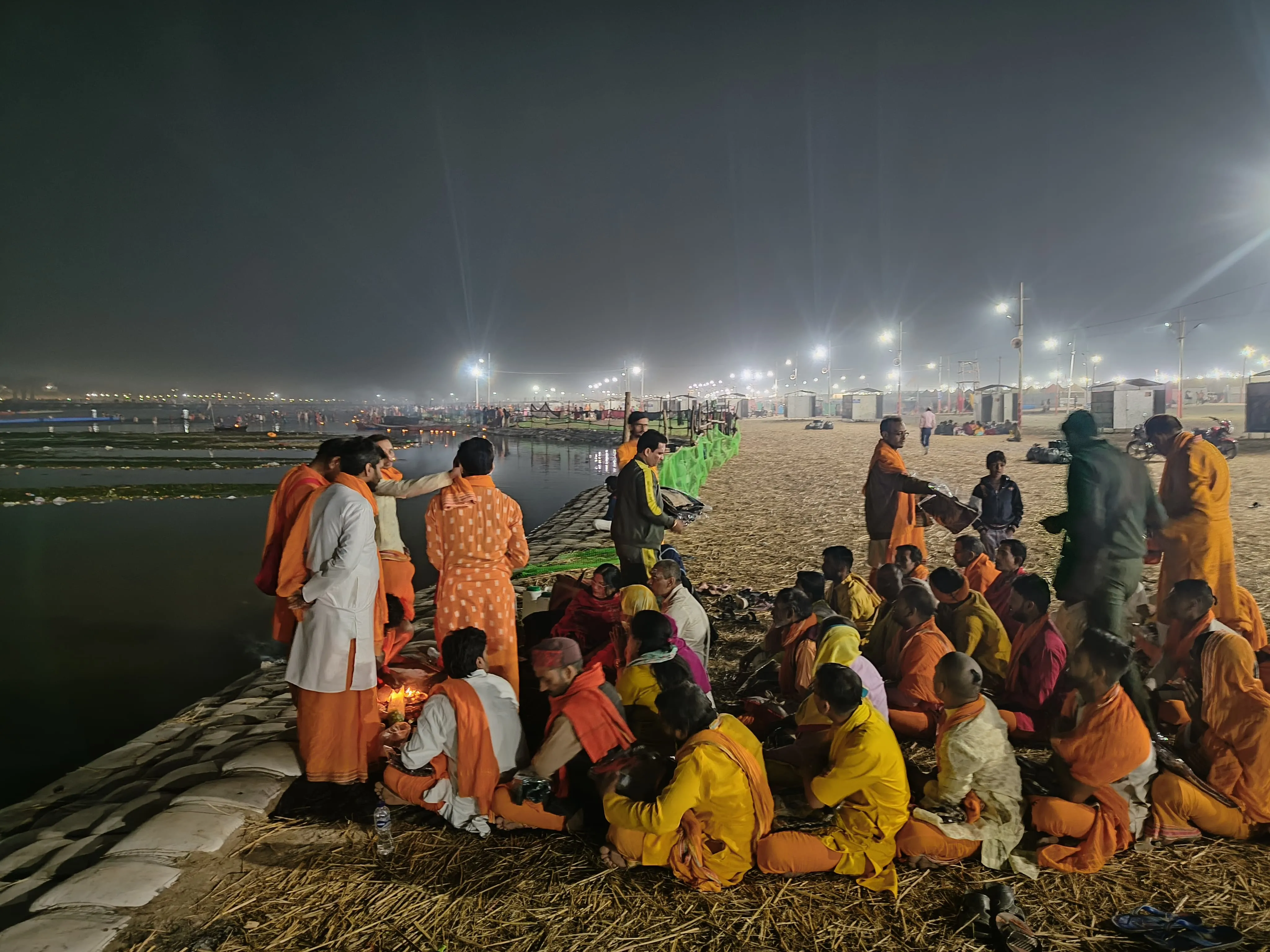
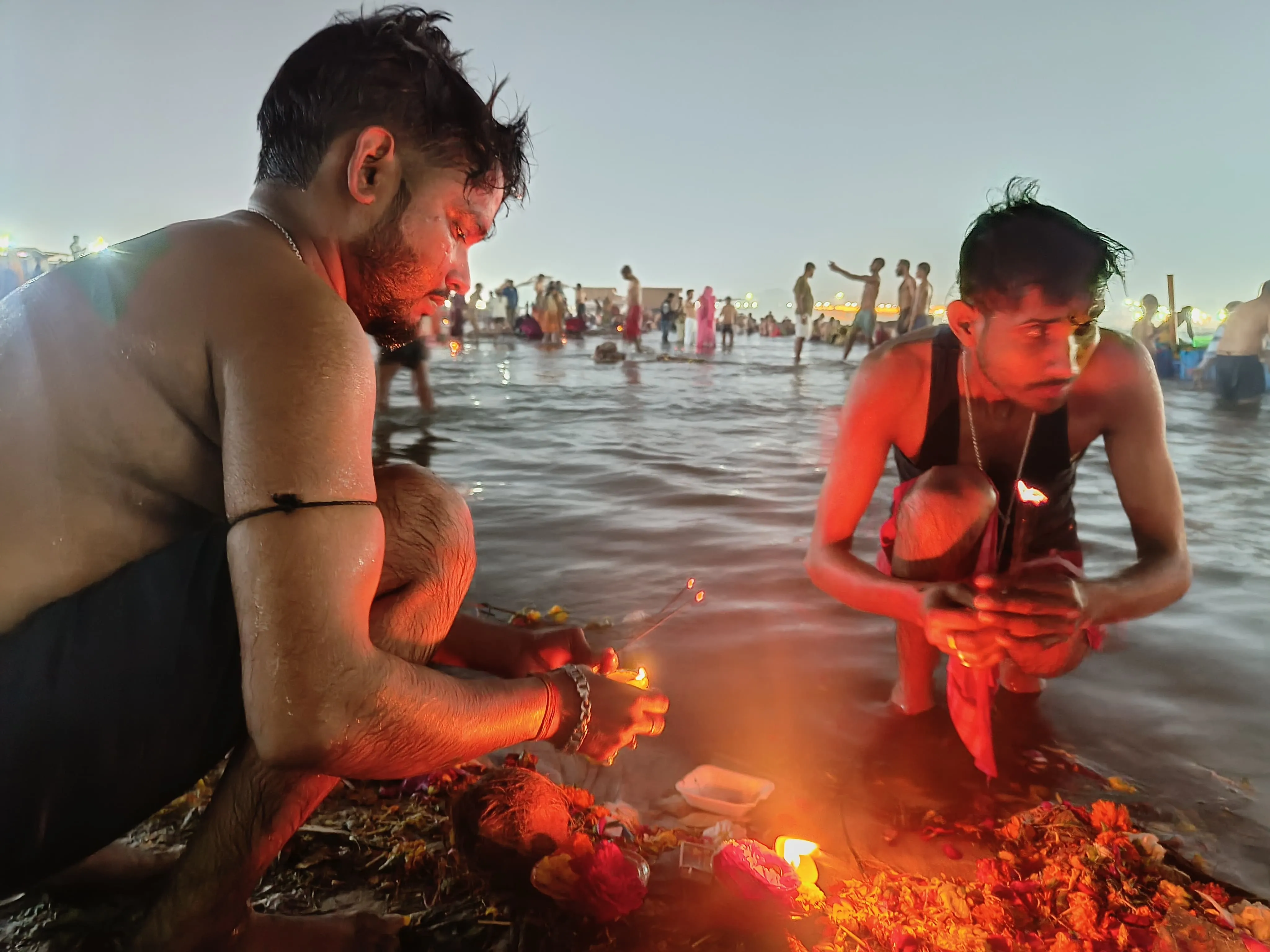
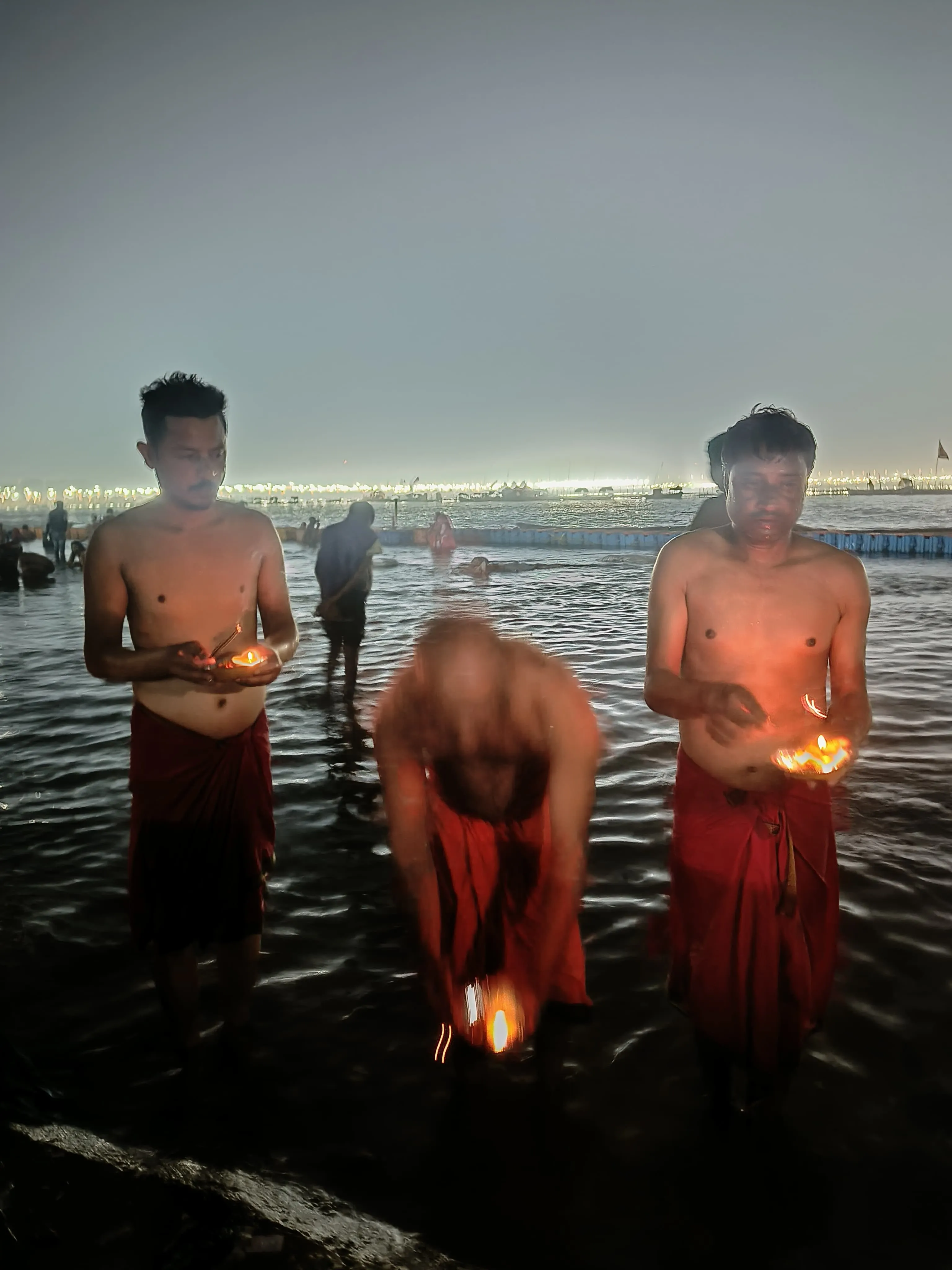
Maha Kumbh: Observations from the Field
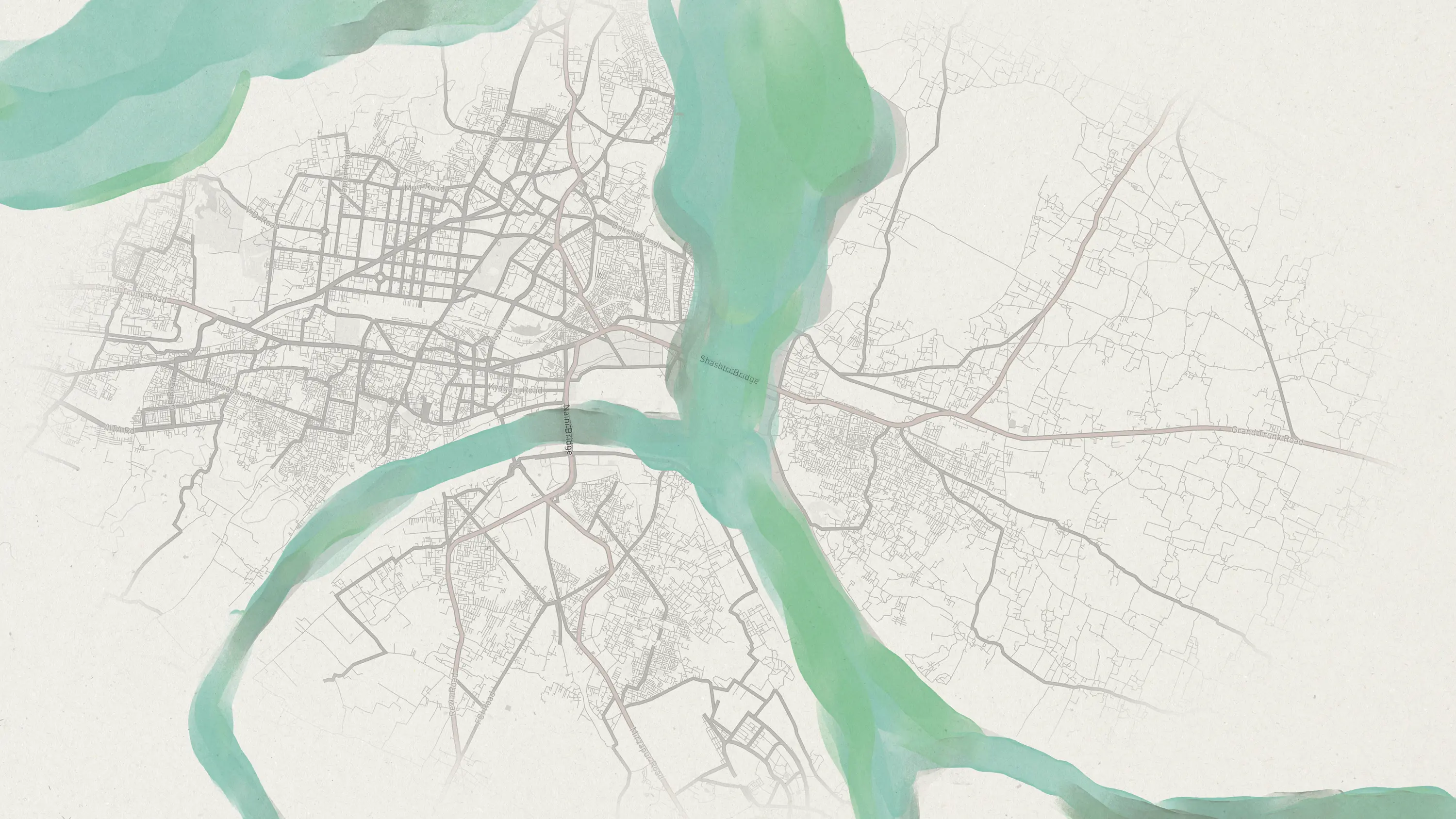
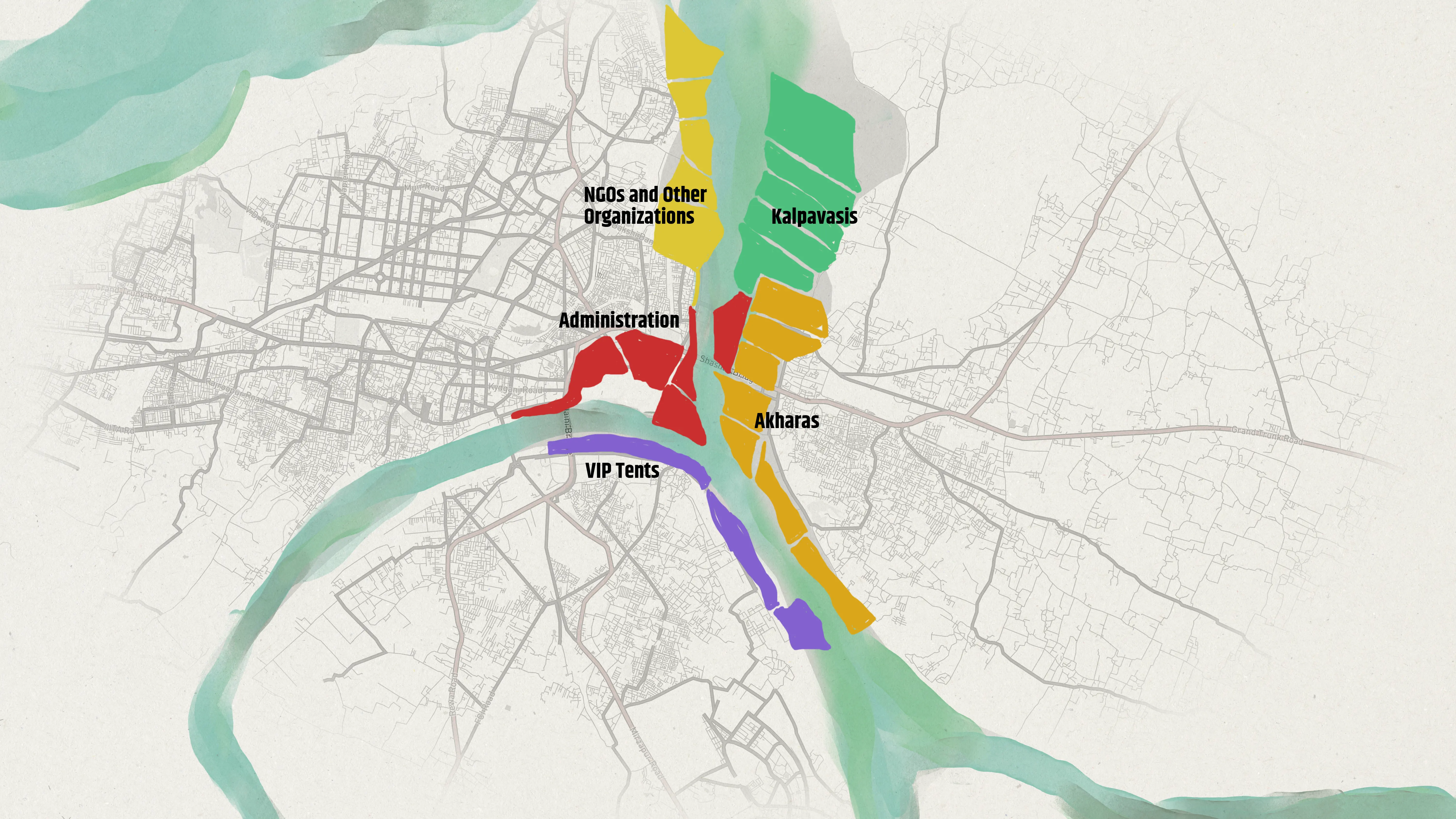



Spatial Layout
The Mela ground is divided into 25 sectors, where PMA provides specific sectors to the stakeholders. Sectors 1-3 cover Parade Ground and Sangam; Sectors 4-10 include Shastri Bridge, Jhunsi, and key temples; Sectors 11-20 cover Jhunsi Kachar and all major akharas; Sectors 22-25 extend along Ganga riverbanks from Jhunsi to the old Naini Bridge.
Fecal coliform rose on snan days and then fell
The Central Pollution Control Board’s (CPCB) monitoring during this Maha Kumbh as well as that in 2013 showed high levels of fecal coli, more so during the Amrit Snan (auspicious bathing) days. There have been deliberate efforts to respond and mitigate this by allowing adequate flows in the river. As witnessed at the Kumbh of Prayag Raj, there has also been an upsurge of environmental action to mitigate the impact, both by the state institutions and the civic society.
Floral waste
With all attempts at waste management, visible piles of floral waste congregated along the banks, where sanitation teams frequented discarded offerings for disposal. Significantly, vendors stood strategically on both riverbanks and the Panda Pujaris (priests) to make it convenient for pilgrims.
Deep Daan
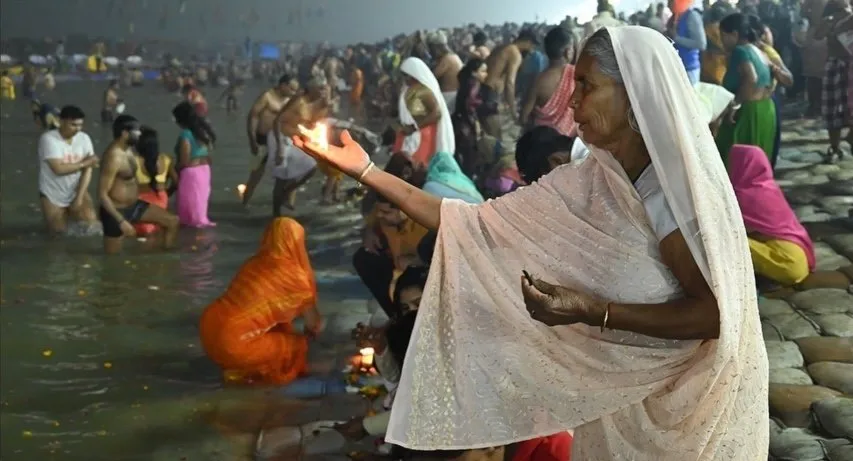
During observations, it was seen that Deep Daan — offering lighted lamps to the river — was one of the most commonly done rituals after the religious Snan or Aarti sessions. There were several vendors positioned around the banks selling Deep Daan kits, usually consisting of a small disposable dish containing flowers, vermilion (Kumkum/Sindoor), incense sticks, and a lamp. Worshipers were spotted moving towards the riverbank boundaries, especially by the floating interceptors that distinguish shallow banks from the main channel, where they lit their lamps and let them float on the water.
Permeating Power: Spiritual and Spatial (River-Society Intersection)
The Maha Kumbh involves a diverse array of stakeholders—including institutions, groups, and individuals—who shape ritual practices and mediate interactions between the river and society in both formal and informal settings. In this section, through visual illustrations, we outline:
- Stakeholders: The key stakeholders and their interactions.
- Spiritual Religious and Economic Relationships: The political economy of large scale human gathering for spiritual and religious purposes — interactions and transactions between the pilgrims and large and small scale businesses.
- Permeating Power: The informal hierarchical power structures which influence the pilgrims and their ritual practice.
- Institutional Framework: The state institutions across scales — from the central government to the local bodies responsible for the management of the river water quality during the Kumbh Mela
Stakeholders
The visual depicts a varied and vast set of stakeholders engaged in the Maha Kumbh. Maha Kumbh is not only about the pilgrims but is also known for its huge economic impact. This manifests in various economic and social interactions with varied intensity. The Kumbh Mela displays delicate interactions between rituals and commerce. The interactions are further shaped by various power relations.
(Our stakeholder mapping and field observations indicated that Akharas had considerable power to negotiate crucial matters such as in procession planning and land allocation. The interaction between the PMA and Akaharas are indicative of this where the PMA actively consults with the Akahadas in advance in planning of the Mahalumbh. The Akhara leaders, who were elected in their traditional councils, coordinated both intra- and inter-Akhara and made sure that their spatial and ritualistic concerns were protected.)
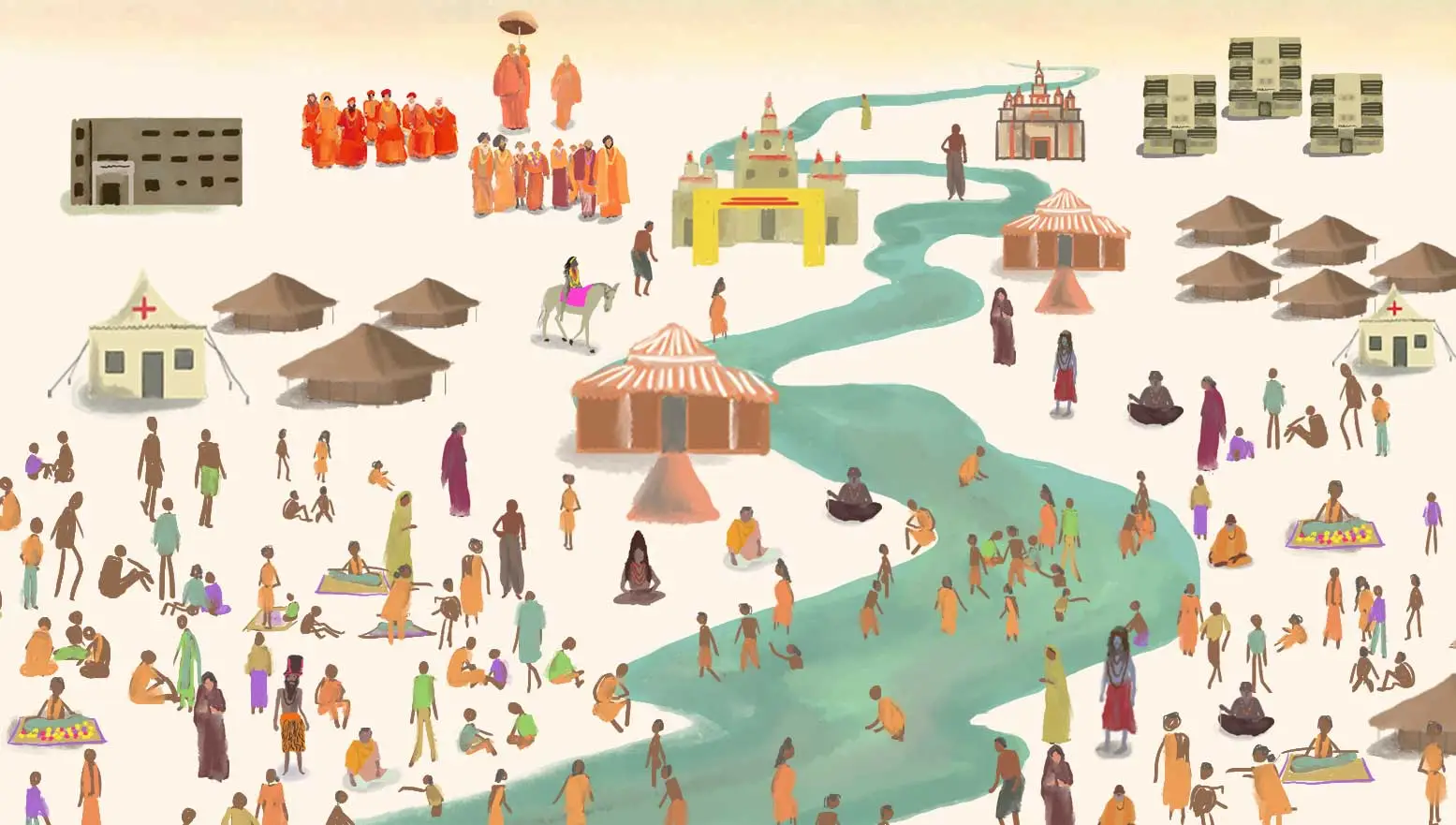

Akharas
An Akhara literally means a ‘wrestling ring’ in Sanskrit, but also stands for a place of debate. These are monastic orders of ascetics that date as far back as the early 8th century. Sri Adi Shankaracharya is believed to have established 7 Akharas evolved from the Dasnaami tradition: Mahanirvani, Niranjani, Juna, Atal, Avahan, Agni and Anand Akhara. The saints and ascetics associated with an Akhara specialized in both scriptures and armaments.

Akhil Bharatiya Akhara Parishad
The Akhil Bharatiya Akhara Parishad (ABAP) is an organization of the Akharas that was formed in 1954 post the tragic stampede at Prayagraj Kumbh Mela. The organization acts as a link between the saints, akharas, people and the administration aiding the management of the event and continuance of the customs, practices and rituals of Kumbh Mela in a proper manner. The Parishad does this task at all the four venues of the Mela. The committee of ABAP consists of two members from each Akharas and it recognizes thirteen Akharas except for the Kinnar Akhara and the Dasnami Sanyasini Akhara.

Prayagraj Mela Authority
The Uttar Pradesh government, through the Uttar Pradesh Prayagraj Mela Authority (Allahabad Act) of 2017, established the Prayagraj Mela Authority for the management of Magh Melas annually and the Ardh Kumbh and the Kumbh Mela at intervals of 6 and 12 years, respectively. The Authority is a body corporate and has been assigned the mandate of infrastructure provision, including civic amenities, health facilities, and power supply.

Panda Pujaris
The Prayagwals, or the Pragwals, are the priests, or Panda Pujaris, associated with the sacred Triveni Sangam similar to the Gayawals at Gaya or the Gangaputras at Varanasi. They lead the pilgrims through the rituals that are performed at the confluence. The Pragwals belong to the Brahmins and also claim to be the ones with privileged rights to perform pujas since Akbar’s reign, according to a royal decree from 1593.

Kalpavas
Kalpavas is a profound practice leading a minimalist life, observing fasting, and performing various rituals along the banks of the confluence for their spiritual evolution.

Naga Sadhus
A revered warrior ascetic order established by Adi Shankaracharya with the founding of the Akharas embodies spiritual supremacy. Traditionally leading the holy dip during Amrit Snan, being the first army protecting the dharma.

Businesses and Small Vendors
They play a vital role by providing essential goods, food, and services to crores of pilgrims, supporting the event's vast logistical needs. Their participation not only enriches the visitor experience but also creates significant livelihood opportunities and economic activity throughout the Mela period.
Stakeholders
The visual depicts a varied and vast set of stakeholders engaged in the Maha Kumbh. Mahakumbh is not only about the pilgrims but is also known for its huge economic impact. This manifests in various economic and social interactions with varied intensity. The Kumbh Mela displays delicate interactions between rituals and commerce. The interactions are further shaped by various power relations.
(Our stakeholder mapping and field observations indicated that Akharas had considerable power to negotiate crucial matters such as in procession planning and land allocation. The interaction between the PMA and Akaharas are indicative of this where the PMA actively consults with the Akaharas in advance in planning of the Mahakumbh. The Akhara leaders, who were elected in their traditional councils, coordinated both intra- and inter-Akhara and made sure that their spatial and ritualistic concerns were protected.)
Akharas
An Akhara literally means a ‘wrestling ring’ in Sanskrit, but also stands for a place of debate. These are monastic orders of ascetics that date as far back as the early 8th century. Sri Adi Shankaracharya is believed to have established 7 Akharas evolved from the Dasnaami tradition: Mahanirvani, Niranjani, Juna, Atal, Avahan, Agni and Anand Akhara. The saints and ascetics associated with an Akhara specialized in both scriptures and armaments.
Akhil Bharatiya Akhara Parishad
The Akhil Bharatiya Akhara Parishad (ABAP) is an organization of the Akharas that was formed in 1954 post the tragic stampede at Prayagraj Kumbh Mela. The organization acts as a link between the saints, akharas, people and the administration aiding the management of the event and continuance of the customs, practices and rituals of Kumbh Mela in a proper manner. The Parishad does this task at all the four venues of the Mela. The committee of ABAP consists of two members from each Akharas and it recognizes thirteen Akharas except for the Kinnar Akhara and the Dasnami Sanyasini Akhara.
Prayagraj Mela Authority
The Uttar Pradesh government, through the Uttar Pradesh Prayagraj Mela Authority (Allahabad Act) of 2017, established the Prayagraj Mela Authority for the management of Magh Melas annually and the Ardh Kumbh and the Kumbh Mela at intervals of 6 and 12 years, respectively. The Authority is a body corporate and has been assigned the mandate of infrastructure provision, including civic amenities, health facilities, and power supply.
Panda Pujaris / Prayagwalas
The Prayagwals, or the Pragwals, are the priests, or Panda Pujaris, associated with the sacred Triveni Sangam similar to the Gayawals at Gaya or the Gangaputras at Varanasi. They lead the pilgrims through the rituals that are performed at the confluence. The Pragwals belong to the Brahmins and also claim to be the ones with privileged rights to perform pujas since Akbar’s reign, according to a royal decree from 1593.
Kalpavas
Kalpavas is a profound practice leading a minimalist life, observing fasting, and performing various rituals along the banks of the confluence for their spiritual evolution.
Naga Sadhus
A revered warrior ascetic order established by Adi Shankaracharya with the founding of the Akharas embodies spiritual supremacy. Traditionally leading the holy dip during Amrit Snan, being the first army protecting the dharma.
Businesses and Small Vendors
They play a vital role by providing essential goods, food, and services to crores of pilgrims, supporting the event's vast logistical needs. Their participation not only enriches the visitor experience but also creates significant livelihood opportunities and economic activity throughout the Mela period.

Spiritual and economic relationships
The fringes of this organised spiritual-commercial space were
inhabited by miniature vendors and spiritual-cultural organisations.
Vendors offering Puja-related items, cuisine, Deep Daan lamps, and
religious paraphernalia did business informally. The PMA determined
whether or not they could do business.
In parallel, cultural and religious organisations organised Satsangs, Kathas,
Havans, and other large devotional events. They provided a valuable spiritual
add-on, with varied points of interaction for pilgrims, but were once again
reliant on PMA's event permissions and land allocation. Here too, a hierarchy
emerged: larger, wealthier organisations got better locations and timings,
while smaller organisations had less preferred conditions.
Permeating Power
This visual captures the spiritual and cultural hierarchy that informs ritual practices and shapes informal interactions with devotees and pilgrims. The illustration delineates four levels within this projection of power or influence—beginning with the Akharas at the top, followed by influential spiritual gurus and socio-cultural organisations, then the Pandas and Purohits, and finally culminating in the pilgrims and Kalpavasis, who constitute the base of this hierarchical structure.
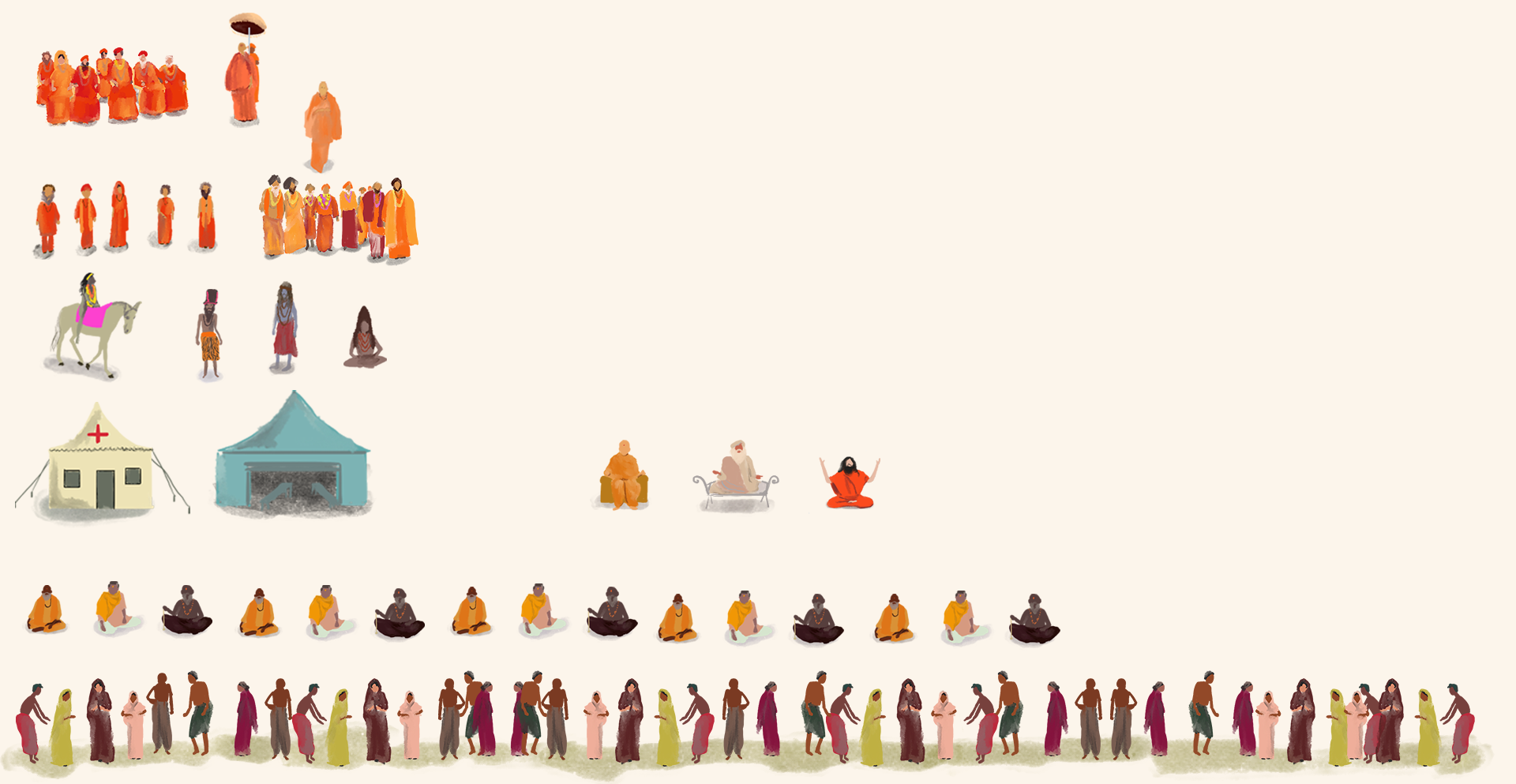

The Akharas—monastic orders—sit at the apex of spiritual authority. Their decisions influence the rituals performed and the sequence of holy bathing.

Spiritual leaders and socio-cultural organizations serve as intermediaries, providing both spiritual guidance and logistical infrastructure for followers.
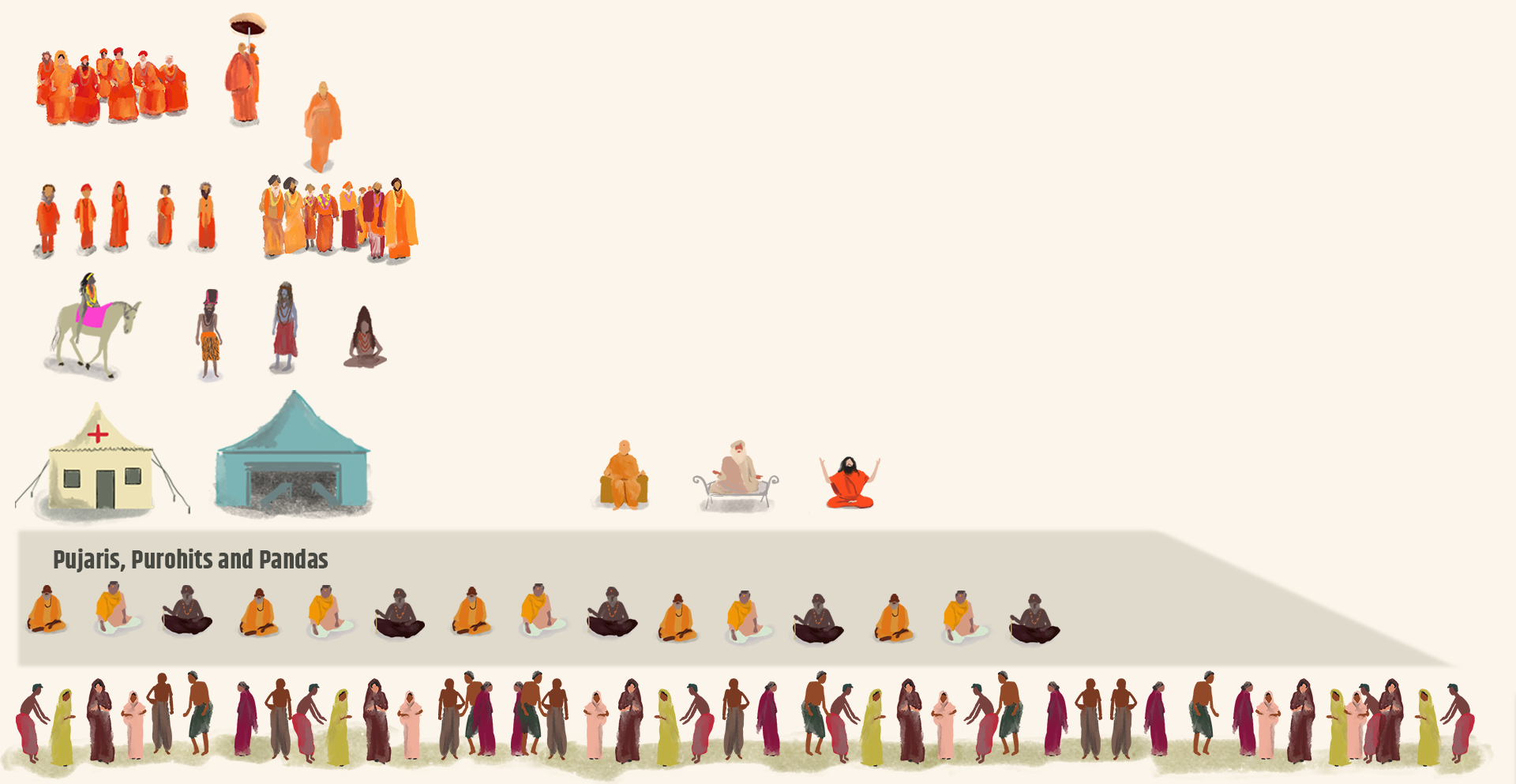
Pandas and Purohits are the ritual specialists who facilitate the ceremonies and serve as local cultural authorities within the Mela.

Pilgrims and Kalpavasis, though at the base of the structure, are central to the scale and sanctity of the event through their participation and devotion.
Permeating Power
This visual captures the spiritual and cultural hierarchy that informs ritual practices and shapes informal interactions with devotees and pilgrims. The illustration delineates four levels within this projection of power or influence—beginning with the Akharas at the top, followed by influential spiritual gurus and socio-cultural organisations, then the Pandas and Purohits, and finally culminating in the pilgrims and Kalpavasis, who constitute the base of this hierarchical structure.






Institutional Framework
At Maha Kumbh 2025, river water quality and sanitation were managed through a multi-tiered institutional framework involving judicial bodies like the NGT, regulatory agencies such as CPCB and UPPCB, and implementing bodies like NMCG, UP Jal Nigam, and the Prayagraj Mela Authority. These institutions coordinated efforts across legal, infrastructural, and administrative levels to balance river water quality compliance.